

Your Brain Has Left the Room - The hidden cost of splitting your attention.
Ever been in a conversation while simultaneously having another more anxious one in your head?
Asking yourself, did I make sense? Why did I say it like that? Do they look bored?
That split focus can quietly pull you out of the conversation and make things awkward quickly.
I’ve written a short blog about why this happens, what damaging effect self-monitoring has on your communication, and how to bring yourself back to the person in front of you to connect better and leave happier.
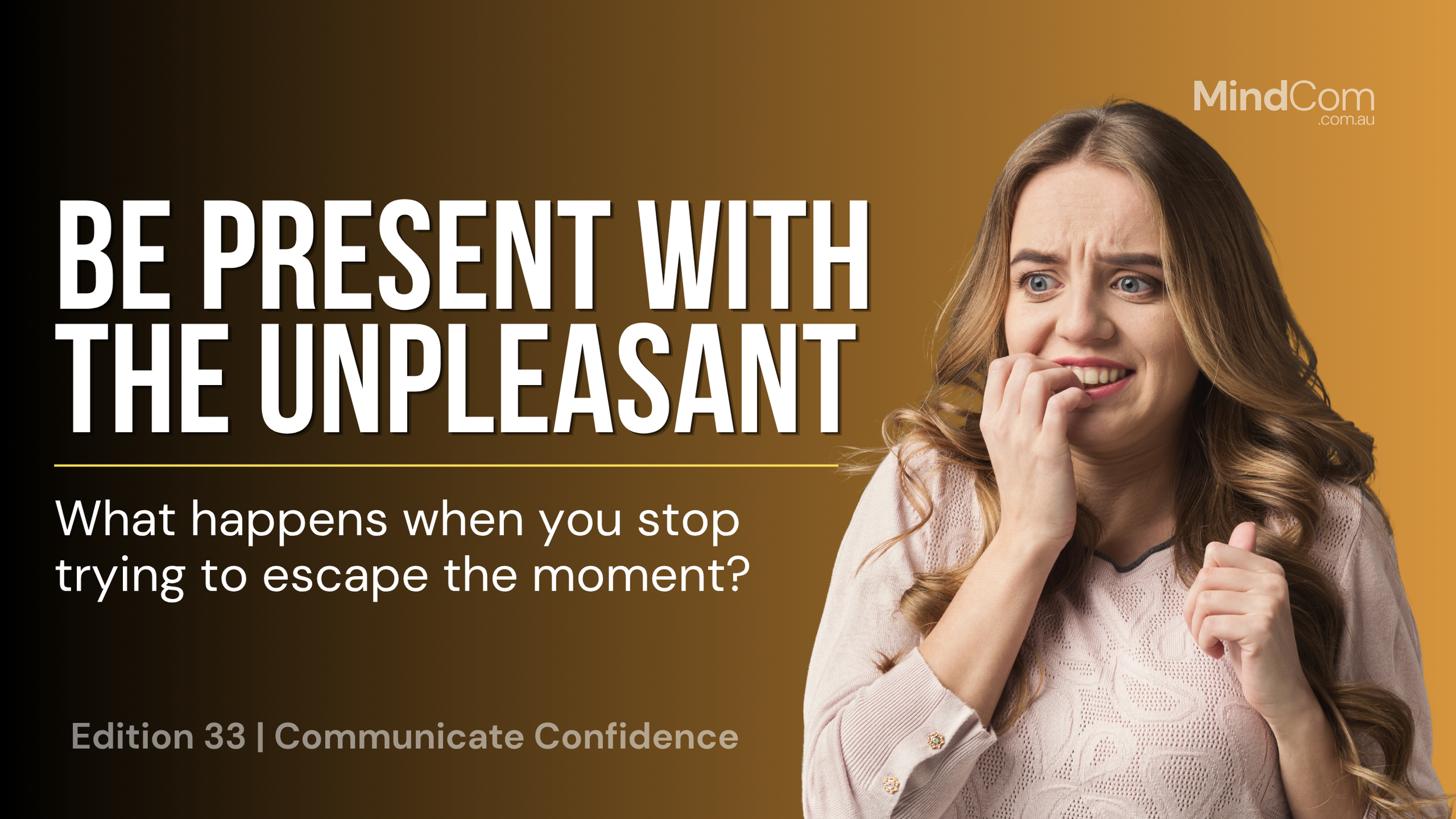
Be Present With the Unpleasant
When pressure hits during a presentation or when public speaking , our instinct is often to escape it. We rush, over-explain and lose connection with the room.
But what if you didn't need to get rid of the discomfort?
What if you could become present with the unpleasant.
Those moments create space between what you feel and how you respond. And in that space, you get something incredibly valuable: choice.
Choose your words. Slow your pace. Reconnect with the room.
Pulled into bad Habits small conversation is where new behaviours begin.
Just this morning, a client texted me: “I knew what I wanted to say, and then it didn’t come out the way I thought it would at all.”
It’s something I hear regularly in my work with people. Knowing what you want to say and actually being able to communicate it when the pressure is on are two very different things.
We often assume the answer is more confidence, more preparation or another communication technique. But what if the real challenge is the gravitational pull of the behaviours we've been practising for years?
Our old patterns have momentum. When the stakes rise, we often fall back into what feels familiar, even when we know there is a better way.
The good news is that new behaviours can develop momentum too.
In this article, I explore why changing the way we communicate takes more than simply knowing what to do, and how small, repeated moments of practice can gradually change our trajectory.

Reaction Gap - Why awareness - not confidence, is the first step to communicating under pressure.
We like to think we're making conscious decisions throughout a conversation or when we are speaking in public, but I suspect many of us are simply watching well-rehearsed patterns unfold. Patterns we've been reinforcing for years without ever questioning whether they're still serving us.
That isn't necessarily a problem. In fact, many of those patterns are incredibly useful and make life easy.
The problem arises when an old pattern takes over before you've had the chance to decide whether it's still appropriate.
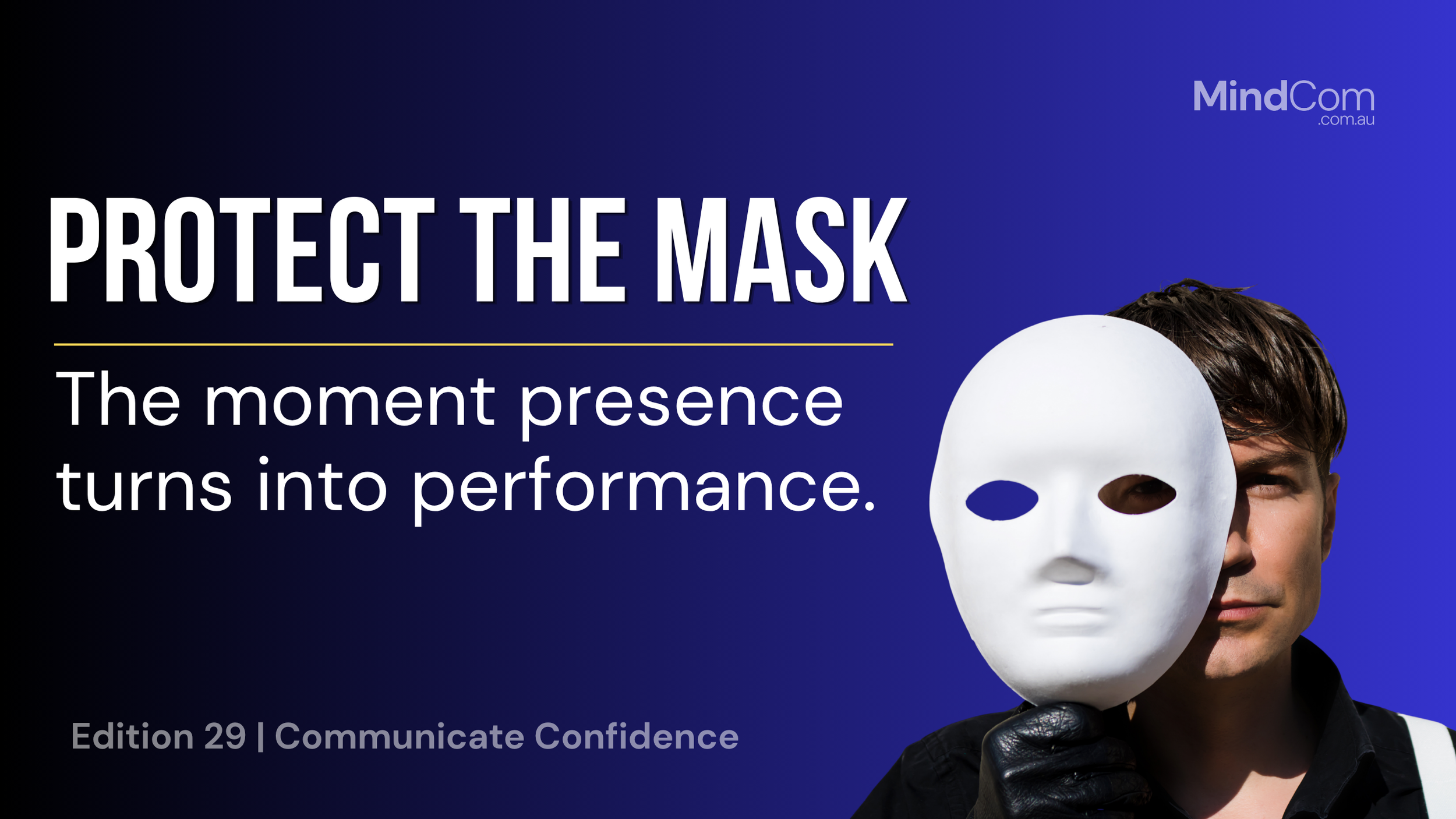
When Protecting Your Image Starts Costing Your Presence
We all want to be seen as capable, credible and someone who belongs. But somewhere along the way, many of us stop communicating to connect and start communicating to protect our image.
This subtle shift changes the signals we send, often without us realising it. In this article, we explore why status feels so important, how our nervous system responds to perceived social threats, and why authentic leadership presence begins the moment we stop performing.
How to Stop Getting Eaten Alive by Dominant Personalities
Ever feel like some people walk into a meeting and take over before you've finished your first sentence?
For steady and analytical personalities, highly dominant people can be frustrating to deal with. But what if the issue isn't their behaviour but that you're speaking different behavioural languages?
In this article, I explore how to stop getting walked over, understand what drives dominant personalities, and communicate with them in a way they actually respect.
The goal isn't to become the lion
It's to learn how to speak lion
Clogged Up - Why teams stall, how communication gets blocked, and what restores performance
Discover why strong teams still underperform when communication breaks down.
Drawing on a powerful real-world experience, this article explores how communication breakdowns, unclear expectations, and leadership blind spots quietly impact team performance.
Learn how effective communication skills and leadership communication practices can restore clarity, alignment, and organisational effectiveness.

The Halo Effect: Why Confidence Gets Promoted and Effectiveness Gets Overlooked (and how to fix it)
You’ve seen it happen before, I’m sure.
Someone walks into the room, shoulders back, voice steady and loud, speaking in decisive statements. Within minutes, the room leans in. People nod. Assumptions are made:
They must know what they’re talking about.
They’ve done the work.
They’re leadership material.
No one has checked the facts yet.
That invisible glow around them? That’s called the halo effect…

Why Being “Bossy” Backfires - And How to Lead With Influence Instead
Ever notice how no one likes being bossed around? Whether it’s at work, home, or anywhere in between, being told what to do usually sparks resistance or shuts things down.
But what if there was a better way to get your point across—one that actually connects, motivates, and gets people on board?
In my latest blog, I share how mindful communication helps you do just that: speak with calm, clarity, and confidence without sounding “bossy.”
If you want to lead better meetings, handle tricky conversations without stress, or just be heard without the anxiety, this one’s for you.